
Research Note: ETFs and private capital mobilisation

This short MOBILIST Research Note explores why and how development finance can engage with the infrastructure for passive investment. It also examines MOBILIST’s role in providing seed capital for the launch of L&G LSF African Government Bond (USD) UCITS ETF – a landmark transaction and the first time a UK government programme has provided seed funding to an ETF.
ETFs in development finance
Development finance should engage with the infrastructure of passive investment
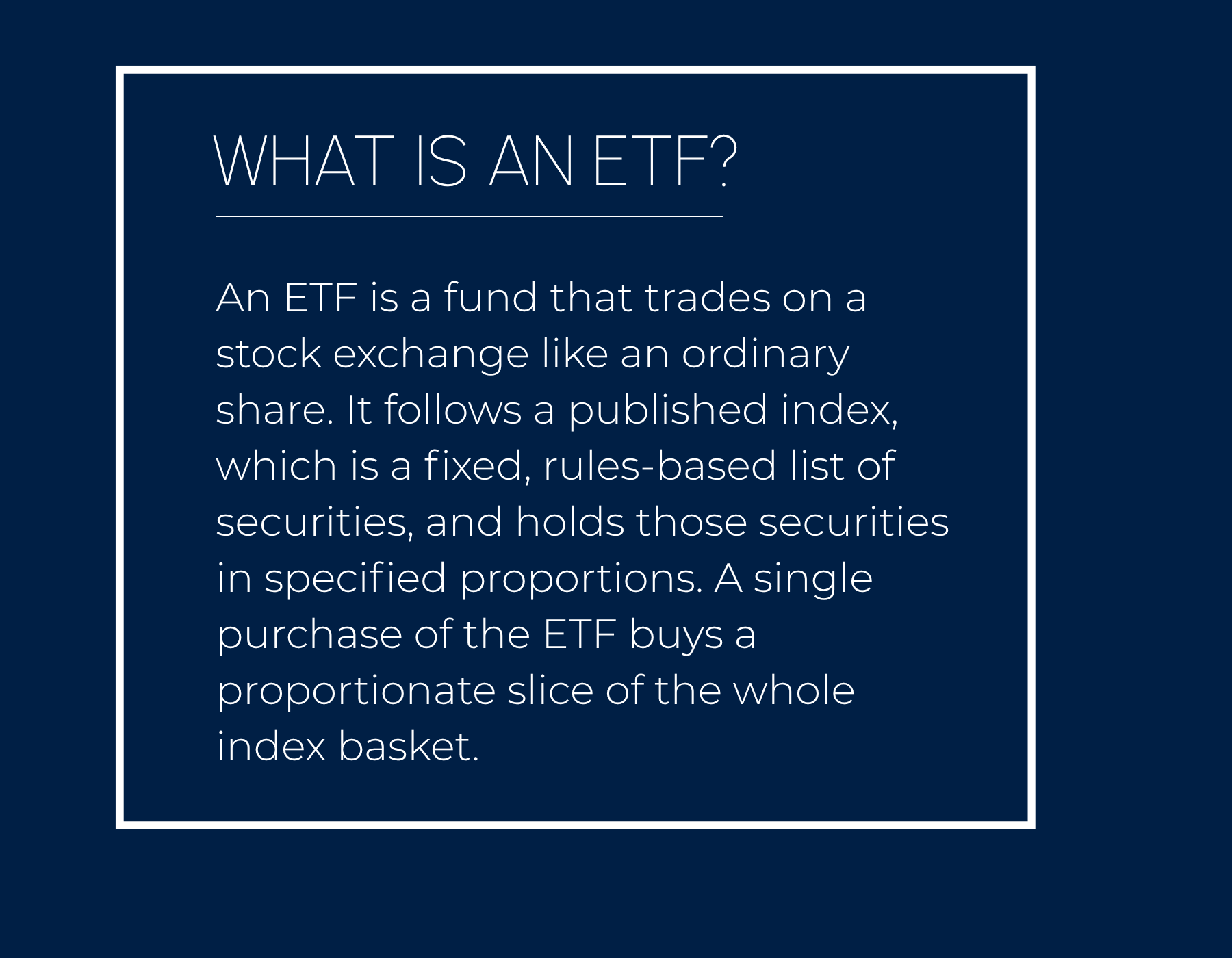
The rise of passive investment has changed how global capital is allocated. A growing share of professionally managed assets is no longer directed security by security, but through indices and the exchange-traded funds (ETFs) that track them. For investors, ETFs reduce the effort and expense involved in selecting and purchasing individual securities. For issuers and markets, inclusion can create a more consistent source of demand, improve price discovery and support secondary-market trading.
Development finance cannot focus only on individual transactions or private-market vehicles – the traditional DFI market. It must also engage with the market infrastructure that determines which countries and securities are visible, investable and accessible at scale. This represents a much larger addressable market that could make a critical contribution to closing the financing gap needed to meet the SDGs in EMDEs.

$19.85 trillion
Global ETF assets at the end of 2025
39%
Percentage of assets managed by passive strategies at the world’s 500 largest asset managers
53.9%
Percentage of combined US mutual fund and ETFs
Why indices and ETFs matter
Mainstream emerging market indices often exclude frontier markets and smaller or first-time issuers, while country-weighting rules can leave included markets with only marginal representation.
The gap is easy to underestimate because a few large Asian economies dominate emerging market indices. China and India alone make up nearly a third of the MSCI EM equity index, while Africa accounts for only 10% of the J.P. Morgan GBI-EM Global Diversified Bond Index, with South Africa as the sole Sub-Saharan African country. Where a country has a very small weight, an asset manager may be able to omit it without materially affecting portfolio tracking error. A sovereign can therefore issue internationally and still remain effectively invisible to large pools of benchmark-aware and passive capital.
This can reinforce a vicious cycle. Low index representation contributes to weaker investor demand and thinner liquidity. Those conditions can increase the cost of trading and make markets less attractive to international investors, which in turn makes future inclusion or increased weighting more difficult. Index design is therefore not simply a technical matter. It can influence the distribution of capital and the effectiveness of wider interventions intended to deepen capital markets
From market access to lower financing costs
The link to development outcomes runs through sovereign financing conditions. If governments refinance debt at lower cost, a smaller share of revenue is absorbed by debt service.
Investors in sovereign bonds require compensation for both credit risk and liquidity risk. Under business as usual, many emerging market bonds trade among a narrow pool of specialist active managers, with thin secondary markets and wide spreads that can make the liquidity premium rival the credit risk premium itself. An index cannot improve an issuer’s underlying creditworthiness, but a credible benchmark and an investable ETF can widen the investor base to include benchmark-aware and passive capital supporting more active secondary trading. This improves price transparency and compresses the liquidity premium over time.
An index cannot improve an issuer’s underlying creditworthiness, but a credible benchmark and an investable ETF can widen the investor base to include benchmark-aware and passive capital supporting more active secondary trading. This improves price transparency and compresses the liquidity premium over time.
The link to development outcomes runs through sovereign financing conditions. Stronger demand and narrower secondary-market spreads can feed into the pricing of new issuance. If governments refinance debt at lower cost, a smaller share of revenue is absorbed by debt service. All else kept equal, this increases fiscal space, improves debt sustainability and reduces vulnerability to refinancing shocks.
MOBILIST's investment in the L&G LSF African Government Bond ETF
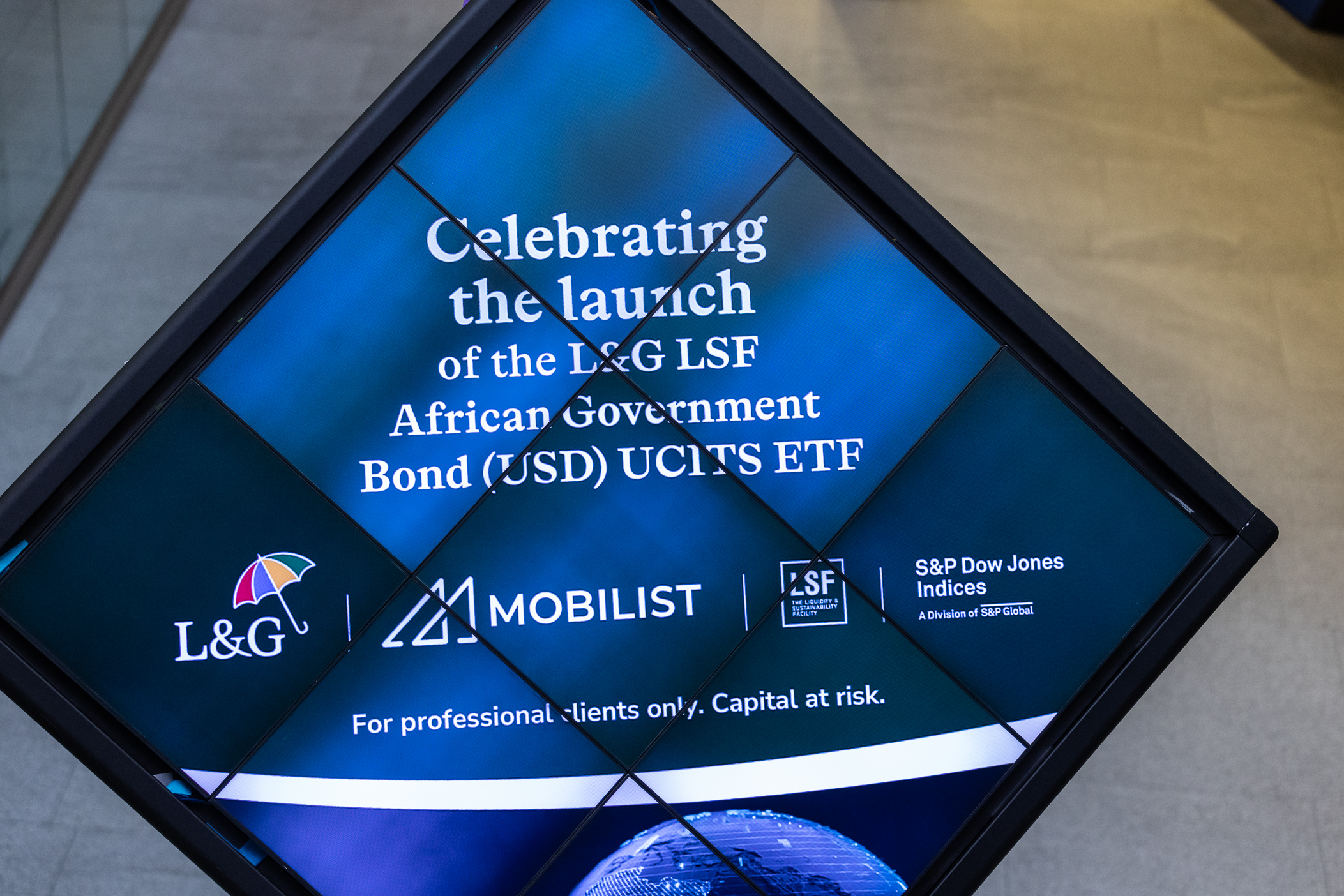
The L&G LSF African Government Bond (USD) UCITS ETF provides a practical example of how development finance can intervene in this part of the market.
The ETF, listed on the London Stock Exchange and seeded by the UK Foreign, Commonwealth & Development Office through MOBILIST, tracks the iBoxx LSF USD African Sovereigns Index. Launched with MOBILIST’s support in 2024, the index covers eligible US dollar sovereign bonds, including investment-grade and sub-investment-grade issuers, with a country cap intended to prevent the largest issuers from dominating the portfolio.

The ETF turns the iBoxx LSF USD African Sovereigns Index into an investable product and includes issuers that mainstream benchmarks may overlook or underweight.
It provides investors a transparent and diversified route to access African sovereign Eurobonds through a structure they already use to allocate capital. It may also provide African institutional investors with a vehicle to allocate capital across borders within the continent. This matters because African savings and financing needs are unevenly distributed, while fragmented national markets can make cross-border investment costly and operationally difficult.
The product complements the Liquidity and Sustainability Facility (LSF). The LSF supports a repo market in eligible African sovereign Eurobonds, allowing investors to use those bonds as collateral to raise cash quickly by temporarily selling them. Repo availability can make bonds more attractive to hold because investors are better able to finance positions and manage liquidity. The index improves visibility and provides consistent daily pricing, while the ETF broadens access and demand. Together, these elements address different parts of the same constraint: the absence of a sufficiently deep trading and financing ecosystem for African sovereign debt.

New investment products face a coordination problem. Investors often wait for credible fund size, trading liquidity and an established performance record before allocating, but these features cannot develop without early capital.
MOBILIST’s seed investment is intended to overcome this launch barrier by giving the ETF initial scale and liquidity. It does not subsidise investor returns or absorb the underlying sovereign credit risk, and public capital can step back as commercial investment grows.
This is a targeted use of development finance. Rather than compensating investors for risk indefinitely, it helps establish infrastructure that private investors can continue to use. The potential mobilisation effect extends beyond the initial fund. A functioning index and ETF create an observable track record, increase the availability of pricing and performance data, and provide a structure that could be replicated for other frontier and emerging markets. They can also generate evidence for regulators and central banks considering reforms needed to enable greater cross-border institutional investment.
Development institutions should treat indices, benchmarks and listed investment products as part of capital market infrastructure.
Where mainstream indices systematically overlook viable markets, support may be justified for credible regional indices built on transparent eligibility rules and products that convert those benchmarks into investable exposures, such as ETFs. Public intervention, such as through the MOBILIST programme, should be additional and time-bound, addressing identifiable barriers such as insufficient launch scale, fragmented data or the absence of supporting financing markets.
However, product creation is not a substitute for sound macroeconomic policy, debt transparency, effective regulation or improvements in market infrastructure. Nor does greater liquidity remove credit risk. The strongest interventions combine investable products with reforms that improve issuance practices, settlement, custody, repo markets and cross-border investment rules. As passive investment increasingly shapes financial systems, development finance can help ensure that African and other emerging and frontier markets are not excluded from those channels by design.