
Lessons and success factors from Pakistan’s first listed local-currency green bond

This report documents the design, structure, and early impact of Pakistan’s first PKR-denominated, rated, and secured green bond — the Parwaaz Green Action Bond (PGAB). Launched by Parwaaz Financial Services, with support from MOBILIST, the bond demonstrates how domestic capital markets can help finance climate action at scale while supporting SMEs and critical social infrastructure.
What is the Parwaaz Green Action Bond?
Pakistan contributes less than 1% of global greenhouse gas emissions yet ranks among the countries most vulnerable to climate change. At the same time, businesses and institutions face rising energy costs and an unreliable power supply. Small and medium-sized enterprises are among the biggest contributors to industrial energy demand in Pakistan, yet they remain largely excluded from traditional climate finance.
The Parwaaz Green Action Bond (PGAB) was created to help SMEs access financing for renewable energy and sustainable infrastructure projects. As Pakistan’s first listed private-sector green bond, it mobilises domestic private capital towards renewable energy, energy efficiency, and climate-positive infrastructure projects across sectors, including manufacturing, healthcare, and education.
A major challenge in Pakistan’s climate finance ecosystem is the reliance on foreign-currency funding, which exposes borrowers to exchange-rate volatility and rising repayment costs. As Pakistan’s first PKR-denominated green bond, PGAB reduces currency risk by aligning financing with local revenues and borrower cash flows.
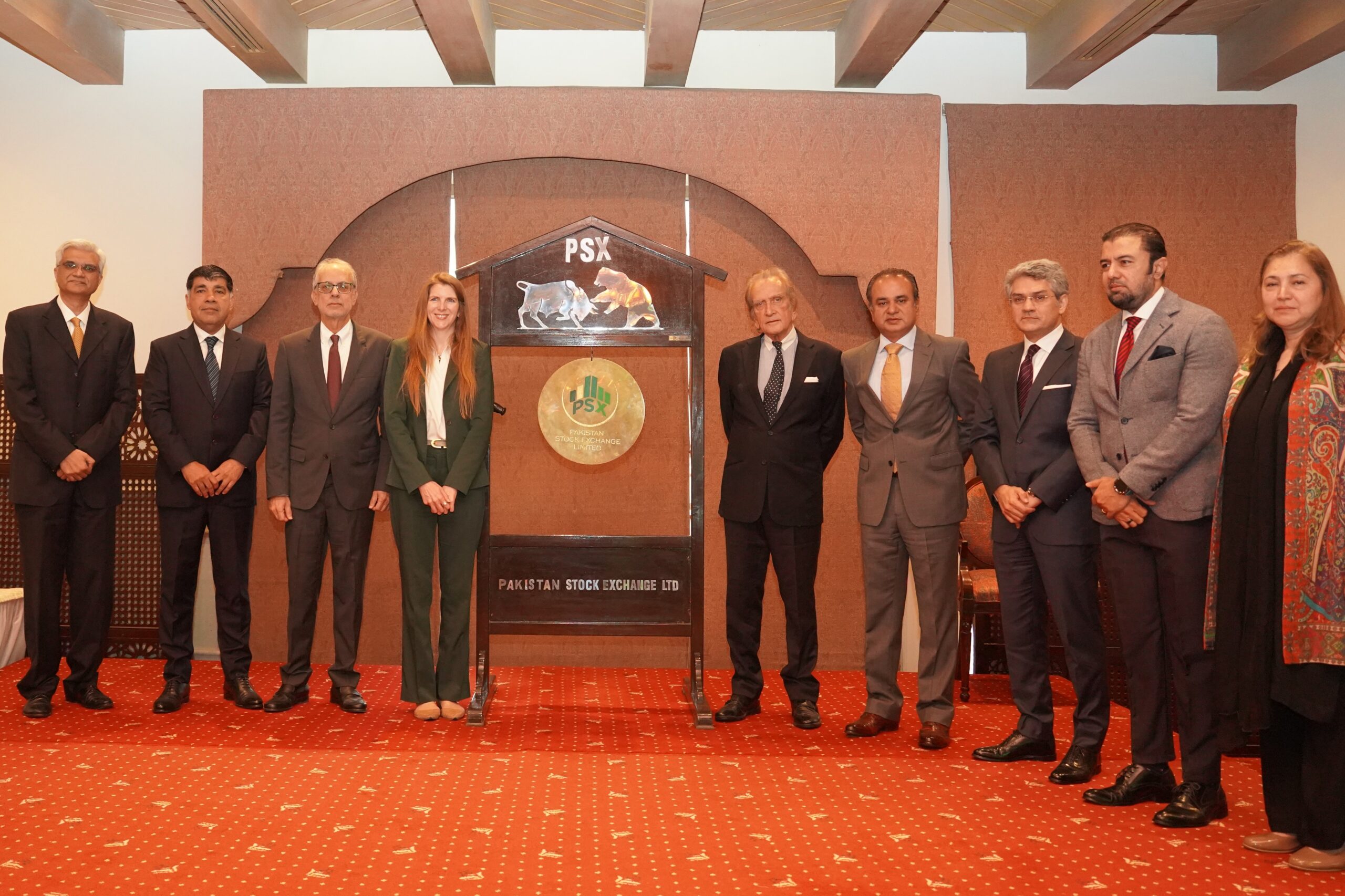
MOBILIST's Catalytic Role
MOBILIST provided targeted technical assistance to help bring the PGAB to market.
Support focused on overcoming barriers that commonly prevent sustainable finance products from scaling in emerging markets.
- Supporting market credibility. MOBILIST enables independent validation of the Green Bond Framework, helping strengthen investor confidence and align the issuance with international best practice.
- Building investor awareness. Technical assistance supported investor engagement activities, communications materials and awareness campaigns designed to improve market understanding of green bonds and climate-aligned investments.
- Navigating regulatory complexity. MOBILIST support also helped PFSL manage legal, regulatory and compliance requirements associated with issuing and listing a green bond in Pakistan’s developing capital market.
- Strengthening local expertise. The partnership contributed to long-term market development by helping build domestic expertise in green bond structuring, impact monitoring, and sustainable finance governance.
Scaling Sustainable Finance in Pakistan
What can others learn from Parwaaz's journey?
By financing SMEs and social institutions through a locally denominated bond structure, PGAB provides a scalable model for aligning economic growth with climate resilience in emerging markets. This report highlights the lessons and success factors from the creation of the bond that are relevant for issuers, regulators, investors, and intermediaries seeking to develop and leverage climate finance instruments in emerging markets.
Innovative collateral structures unlock underserved borrowers.
Asset-backed financing — where solar equipment funded by the bond serves as primary collateral — removes the requirement for traditional collateral such as property mortgages or cash deposits. This enables SMEs, as well as social institutions registered as Trusts or NPOs, to access green finance without the structural barriers prevalent in the traditional banking sector.
Cash flow-positive design strengthens repayment performance.
Structuring monthly debt service obligations to remain below the borrower’s pre-financing electricity costs creates an immediate positive cash flow from the outset, fundamentally differentiating PGAB-funded initiatives from conventional financing.
Long asset lifespans deliver sustained value well beyond loan maturity.
With a payback period of under 3–4 years and an asset lifespan exceeding 25 years, borrowers benefit from long-term cost certainty and over two decades of essentially free electricity after the loan is serviced.
Layered risk mitigation enhances investor confidence. Embedding multiple risk mitigation measures — including a minimum 25% borrower equity stake, comprehensive insurance coverage by an A-rated insurer, and a low default risk profile tied to essential operating cost reductions — contributed to a strengthened risk profile that proved attractive to institutional investors.
Alignment with national and international regulatory frameworks is essential.
The PGAB’s adherence to SECP Green Bond Guidelines and ICMA Green Bond Principles, combined with an AA- credit rating and independent external review, provided the credibility and transparency needed to secure investment from nine financial institutions.
Robust governance and transparent impact reporting are non-negotiable.
Linking use of proceeds to measurable, verifiable outcomes — such as installed renewable capacity, SME revenue generation, and job creation — moves beyond ambition to action and provides investors with the tangible outputs they require.
SME regulatory readiness is often underestimated.
The PGAB process demonstrated that regulatory and compliance constraints associated with SMEs are often overstated. With appropriate incentives and aligned financing structures, SMEs demonstrated the capacity to meet reporting, monitoring, and documentation requirements effectively.
Local currency denomination is a critical enabler.
As Pakistan’s first PKR-denominated green bond, the PGAB mitigates exchange rate risk by aligning financing currency with borrower revenues, enhancing project bankability and making climate investment commercially viable under conditions of economic volatility.
The PGAB experience provides a practical roadmap for scaling climate finance in emerging markets. Beyond the bond itself, the transaction helped to establish a replicable model for future green finance issuances in Pakistan.